

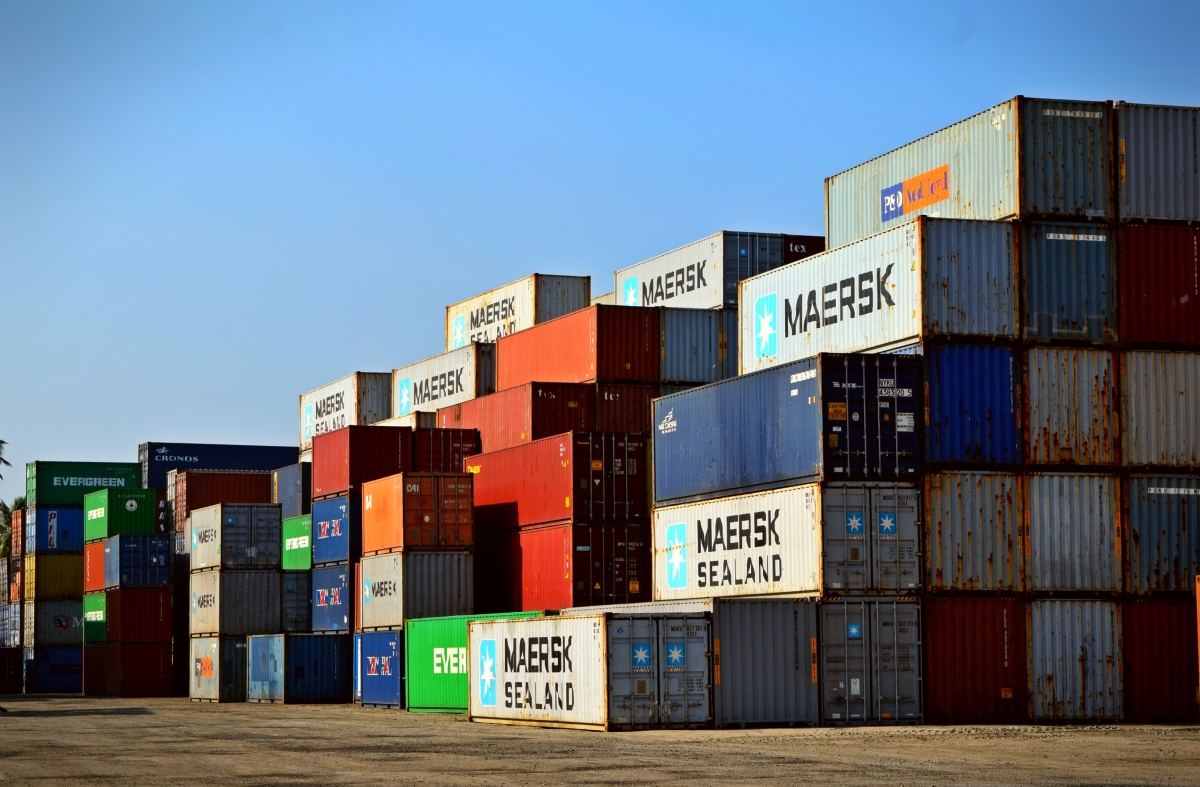
Have you had the experience of dealing with large amounts of left-overs after you hosted a gathering of friends? Hopefully some of your friends might help by carrying some of the food home for their own consumption the next day. How does it feel to throw the rest? (By the way, according to a UN study, one-third of food produced is wasted!)
Waste: Over-production
There is a term used in the real estate business, ‘inventory’, which means constructed properties for which there are no takers. Since people keep buying property, this inventory gets consumed with time. So, how long do you think a brand-new piece of property should stay locked up before a buyer comes along? You might start answering the question by asking why at all should it stay that way – it should have been sold before construction was completed. Well… things are a bit different on the ground. There are real estate markets across India today, where there is unsold inventory of 8 years! And these are not small pockets in isolated townships. These are some of the largest markets of the nation. Ghost towns, awaiting humans to bring life to them.
Some of India’s automotive majors are in a similar place – they can supply many of their models to dealers for several months while keeping their plants shut (and they may, at the same time, be struggling to meet demand for a few models!).
The above examples are large ones, but this form of waste is to be found even inside business processes. Inside many factories, one can see stacks of ‘WIP’ at various places. It took effort to stack them that way, and it will take effort to retrieve them from the stack later. There might be deterioration of quality of some of the stacked items. And, of course, precious funds are locked up in the form of inventory – sometimes for several months.
Inside manufacturing setups, typically, over-production as a form of waste is separated from the waste of carrying inventory. However, in a more general context, they can be seen together.
What can functions do to prevent over-production? The obvious action is improving demand estimation.
The beauty of any service is that, almost by definition, service cannot be over-produced. French fries at McDonald’s will not be lost because they were fried but no one purchased them soon enough. No insurance policy will get generated, awaiting a customer to purchase it, etc.
However, sometimes, intangible products can seem to be services, but they behave more like tangible products. How do you view e-Learning modules that stay largely un-accessed by employees in the company’s LMS? Or training programs for which only half the intended participants turn up? What about various analytical reports churned out by the corporate office that no one reads?
What can functions do to prevent over-production? The obvious action is improving demand estimation. Companies put in all kinds of ‘lead indicators’ of customer demand, in order to activate procurements and production runs in time to provide the customers the product in time. Even so, this is not easy to get right. Companies often do not wish to have stock-outs – customer demand turned down because products were not available. Also, the costing systems of companies often do not account for the entire cost of over-production, leading to erroneous decisions – as perhaps happened in the real estate and the automotive sectors. As can be sensed, this is a capability that takes time to develop.
Very often, a little investigation reveals that the issue is actually of quality – defects masquerading as over-production. Few will be willing to go through humdrum e-Learning modules. Sometimes the issue turns out to be one of communication – the value proposition is not articulated correctly by the producer. A portion of India’s agricultural produce is by farmers who do not spend on fertilisers and pesticides, so what they produce can actually be placed on the premium shelves of supermarkets as organic produce.
Related Readings :
GUNNION L. Manufacturing Capacity Utilization Has Been Falling; Has Anyone Noticed, Deloitte Insights, Economics Spotlight ( May 2018 )


